IIT Roorkee · Swadeshi Shodh Sansthan · IGNTU Amarkantak · ICAR-IARI · University of Agder, Norway
राष्ट्रीय संगोष्ठी  ·  National Seminar  ·  Call for Papers & Book Chapters

G.Y.A.N. par DHYAN

Focused attention on the four Amrit Stambh of Viksit Bharat 2047 — Garib, Yuva, Annadata, Nari Shakti. A scholarly inquiry into converting a decade of welfare saturation into durable, cooperative, technology-enabled productivity.

Garib · Poor Yuva · Youth Annadata · Farmers Nari Shakti · Women
DHYAN 2047
80.67crore
people receiving free foodgrain under PM Garib Kalyan Anna Yojana
56.16crore
Jan Dhan accounts bringing the unbanked into the formal economy
24.82crore
Indians who escaped multidimensional poverty, 2013–14 to 2022–23
10.05crore
households organised into 90.91 lakh women's Self-Help Groups
The Premise

A welfare floor, fully built. A productivity ceiling, still open.

India's decade of saturation-mode delivery has, for the first time in the Republic's history, met the basic-survival needs of nearly 1.4 billion citizens. The question this seminar asks is what comes next.

The paradox

Despite welfare saturation, productivity and enterprise-formation across the GYAN universe remain sub-optimal. Scheme delivery is institutionally siloed across more than thirty central ministries; vernacular capacity-building is fragmentary; and there is no unified decision-support architecture to channel welfare-liberated beneficiaries into cooperative-based productive collectives that turn waste into wealth.

The organising idea — DHYAN

Dedication and Holistic Yes-spirit drive Aatmanirbhar Nation-building for every citizen of Bharat. DHYAN — focused, dedicated attention — asks scholarship and policy to concentrate, with the steadiness of meditation, on the four constituencies whose simultaneous economic uplift the Viksit Bharat 2047 target depends upon.

Why the seminar matters now

01

The welfare floor is established. Headline coverage across all four pillars confirms survival-level needs have been addressed at population scale.

02

The digital substrate has matured. Aadhaar, UPI, AgriStack, ABHA, e-Shram, ONDC and the Bhashini language stack make an integrated, multilingual platform technically feasible.

03

The demographic window is finite. With a median age below twenty-nine, the productive transformation of India's youth cohort cannot be deferred.

Four Amrit Stambh

The GYAN pillars

Each pillar carries its own scheme architecture, its own conversion frontier, and ten dedicated sub-themes open for contribution.

PILLAR I

Garib · Poor

80.67 cr
covered by free foodgrain under PMGKAY, extended to Dec 2028
  • PM Awas Yojana — ~3.85 cr rural houses sanctioned
  • PM Jan Dhan Yojana — 56.16 cr accounts, 55.7% held by women
  • PM-SVANidhi — 96 lakh+ loans to street vendors
  1. From welfare to work: pathways off subsidy dependence
  2. Studying the drivers of the 24.82-crore MPI exit
  3. Financial inclusion to financial capability
  4. Street-vendor and informal-sector formalisation
  5. Housing, habitat and local-resource livelihoods
  6. MGNREGA-to-asset convergence
  7. Multi-stakeholder cooperatives for the poor
  8. Last-mile convergence and DISHA accountability
  9. Digital and financial literacy for low-literacy citizens
  10. Measuring dignity and agency beyond income
PILLAR II

Yuva · Youth

1.97 lakh+
DPIIT-recognised startups, generating 21+ lakh direct jobs
  • PM Kaushal Vikas Yojana — 1.60 crore+ trained
  • Employment Linked Incentive — targets 3.5 cr+ jobs
  • PM Mudra Yojana — ₹32.61 lakh cr in collateral-light credit
  1. Closing the skill–job mismatch
  2. Youth-led enterprise beyond metros
  3. Employment-linked incentives in practice
  4. Youth cooperatives and producer companies
  5. Digital and AI skills for the rising workforce
  6. Apprenticeship, internship and industry linkage
  7. Innovation, tinkering and grassroots problem-solving
  8. Access to capital for young entrepreneurs
  9. Migration, local opportunity and reverse-migration
  10. Youth as change-agents in GYAN delivery
PILLAR III

Annadata · Farmers

10,000
FPOs achieved, with 56.32 lakh farmer-members
  • PM-KISAN — ₹4.27 lakh cr+ to 11 cr+ families
  • Kisan Credit Card — 7.72 crore operative cards
  • PM Dhan-Dhaanya Krishi Yojana — 36 schemes, 117 KPIs
  1. Scaling Farmer Producer Organisations
  2. Processing-led waste-into-wealth value addition
  3. Beyond MSP: market linkage and price realisation
  4. PMDDKY convergence in underperforming districts
  5. Agri-credit, insurance and risk management
  6. Technology in agriculture — AgriStack, drones, AI
  7. Natural and sustainable farming
  8. One District One Product and Geographical Indications
  9. Non-timber forest produce and tribal value-chains
  10. Climate resilience and the local-loop farm economy
PILLAR IV

Nari Shakti · Women

3.01 cr
Lakhpati Didis achieved, against a 6-crore target by 2029–30
  • DAY-NRLM SHGs — 10.05 cr households, ₹12.18 lakh cr credit
  • Gender Budget — ₹4.49 lakh cr, 8.86% of FY26 outlay
  • Namo Drone Didi — women as agri-technology providers
  1. The Lakhpati Didi pathway
  2. Women-led producer companies
  3. From cash transfer to productive investment
  4. SHG credit, banking correspondents and Bank Sakhis
  5. Women in agri-technology
  6. Decision-making power and household agency
  7. Digital and financial literacy for women
  8. Maternal welfare to economic participation
  9. Women's leadership in cooperatives and local governance
  10. Safety, mobility and the enabling environment
From welfare to productivity

The five-stage ladder

India has substantially completed the first two stages for much of the GYAN universe. The seminar — and the proposed GYAN Platform — is a transition-engineering technology for the three stages still ahead.

1

Survival

Basic needs met

2

Stability

Assets & accounts

3

Skilling

Capabilities built

4

Synergy

Cooperative scale

5

Sovereignty

Aatmanirbhar self-reliance

The Flagship Idea

One Nation, One GYAN Platform

A single, multilingual, AI-enabled window that brings citizens, cooperatives, officials, banks, industry and academia together — not a parallel system, but an integrating layer built on India's sovereign Digital Public Infrastructure.

L1

Access

Multilingual, voice-first interface across mobile, web and IVR for feature phones — all 22 scheduled languages via Bhashini.

L2

Intelligence

AI advisory & eligibility engine — Indic LLMs with retrieval-augmented generation over verified scheme documents.

L3

Convergence

Cooperative-pathway & district-economy engine matching beneficiaries to SHGs, FPOs and waste-into-wealth opportunities.

L4

Trust

Consent-based data & payments — DPDP-compliant, UPI/DBT-enabled, with a tamper-evident audit trail.

Built on India's Digital Public Infrastructure
AadhaarUPIAgriStackABHAe-ShramONDCBhashini

Already operational at scale

The Government has begun moving toward convergence-based delivery, giving the platform concept a working precedent rather than a blank slate.

  • PMDDKY converges 36 schemes across 11 departments in 100 districts, tracked on 117 KPIs
  • ABHA has crossed 90 crore health accounts; e-Shram has registered 30.95 crore+ workers
  • DISHA committees already coordinate central-scheme implementation at district level
  • UPI processed over 228 billion transactions in 2025
For Contributors

Forty sub-themes, six objectives

Submissions may engage any of the forty sub-themes above, or the cross-cutting questions on convergence, platform design, trust & privacy, measurement and evidence quality.

Convergence governanceCross-cutting
Multilingual, voice-first platform design for low-literacy usersCross-cutting
Consent-based data architecture under the DPDP regimeCross-cutting
Measuring welfare-to-productivity beyond incomeCross-cutting
Standardising and dating scheme-coverage evidenceCross-cutting
Call for Papers & Book Chapters

Contribute to the edited volume

Original, unpublished research papers and book chapters are invited from academicians, research scholars, policymakers, practitioners, technologists and postgraduate students.

₹0

No registration fee

No fee for authors submitting papers or chapters.

ISBN

National publication

All accepted work published in a peer-reviewed edited volume.

20

National Awards

Ten for best research papers, ten for best book chapters.

Jan 20

2027 deadline

Firm last date for submission of full papers and chapters.

Manuscript guidelines

LanguageEnglish or Hindi; bilingual abstracts encouraged
Abstract500 words, 4–6 keywords, theme & sub-theme indicated
Research paper3,500–6,000 words including references, tables & figures
Book chapter5,000–8,000 words including references, tables & figures
FormatMS Word (.docx), A4, Times New Roman 12pt, 1.5 spacing, 1″ margins, justified
ReferencingAPA 7th edition; all scheme data sourced and dated
OriginalityUnpublished; similarity index within UGC limit (≤10%)
Co-authorshipMaximum of three authors per submission

How to submit

Manuscripts are submitted electronically with the subject line "GYAN par DHYAN — [Theme No.] — [Author Surname]." A separate title page should carry author names, affiliations and contact details; the manuscript body itself should be anonymised for double-blind review.

All submissions undergo double-blind peer review. Acceptance is communicated by email, with reviewer feedback where revisions are sought. Awards are adjudged on originality, methodological rigour, empirical or design contribution, and policy relevance.

seminar.gyanpardhyan@institute.edu
Program Schedule

Five milestones, five months

Sep 2026

High-level discussion

Swadeshi Shodh Sansthan, New Delhi

Oct 2026

High-level discussion

ICAR-IARI, New Delhi

Nov 2026

High-level discussion

University of Agder, Norway

Dec 2026

Sensitisation program

IIT Roorkee

Jan 2027

Culminating session

Indira Gandhi National Tribal University, Amarkantak

Seminar Secretariat

Organising Leadership

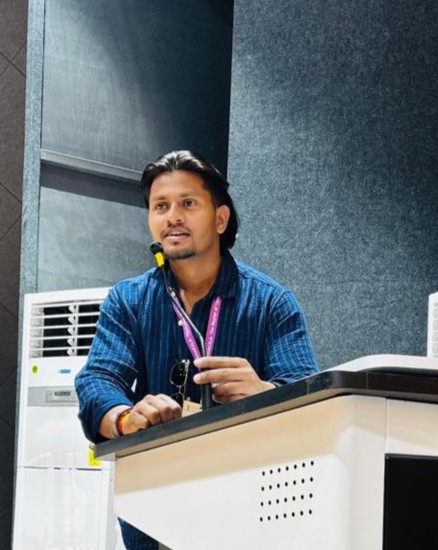
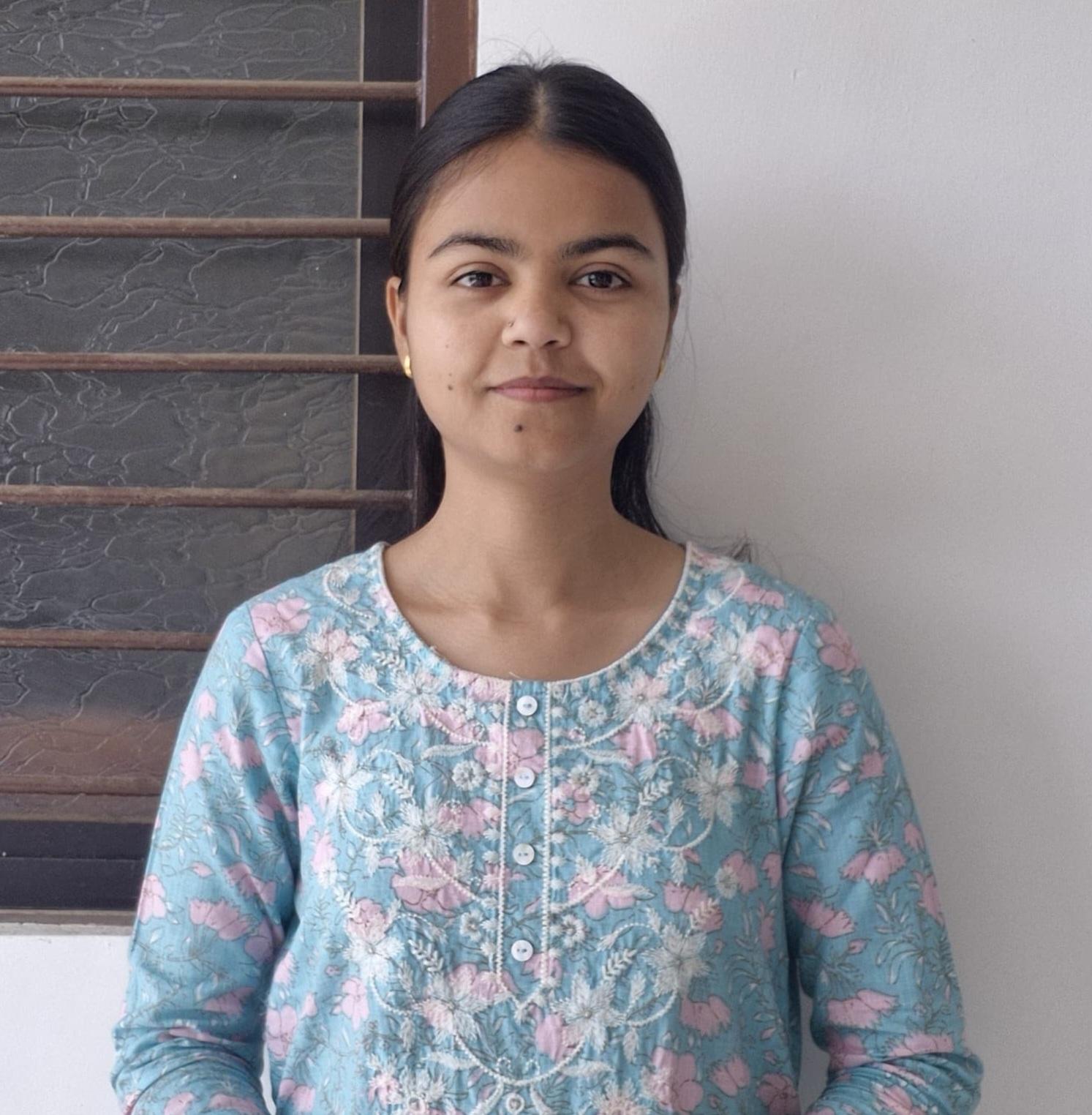
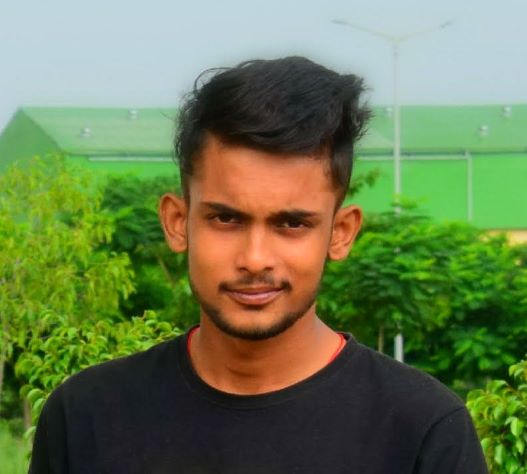
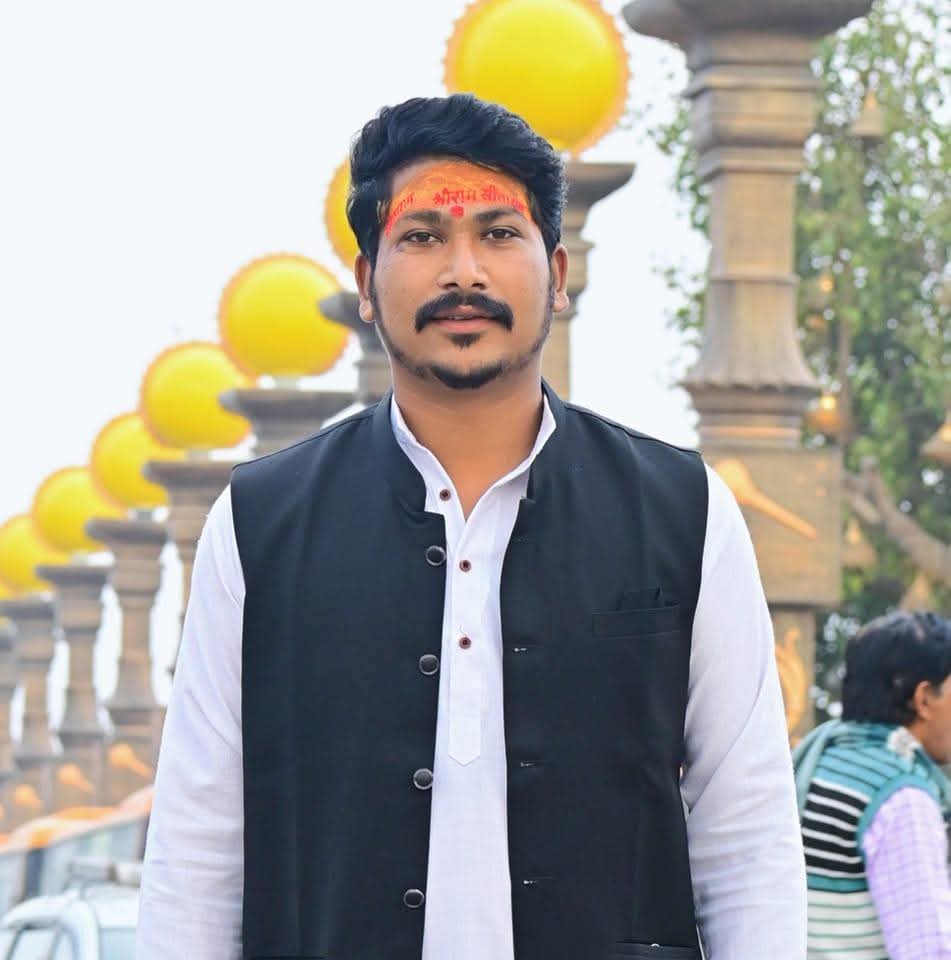
The seminar is coordinated by the Organising Secretary and three Co-Organising Secretaries representing the partner institutions. Click on any photo to upload or update.

Organising Secretary
📷
Upload
Organising Secretary
Vishal Tamrakar
PhD Scholar
Indira Gandhi National Tribal University, Amarkantak
Co-Secretary 1
📷
Upload
Co-Organising Secretary
Mr. Rohit Kumar
PhD Scholar, Dept. of Computer Science
Indira Gandhi National Tribal University
Co-Secretary 2
📷
Upload
Co-Organising Secretary
Ms. Gaytri Rajput
PhD Scholar, Dept. of Computer Science
Indira Gandhi National Tribal University
Co-Secretary 3
Co-Organising Secretary
Mr. Ayan Brahma
PhD Scholar, Dept. of Computer Science
Indira Gandhi National Tribal Universitys